India’s green fuel transition is moving fast, and compressed biogas sits right at the centre of the push toward energy security. With ambitious targets under the SATAT framework and strict timelines for mandatory blending of CBG in city gas distribution networks,...
Rapid industrialization and urbanization have created two compounding challenges: overflowing urban landfills and an escalating demand for commercial energy. For decades, organic waste management was viewed solely as an environmental compliance burden. Today,...
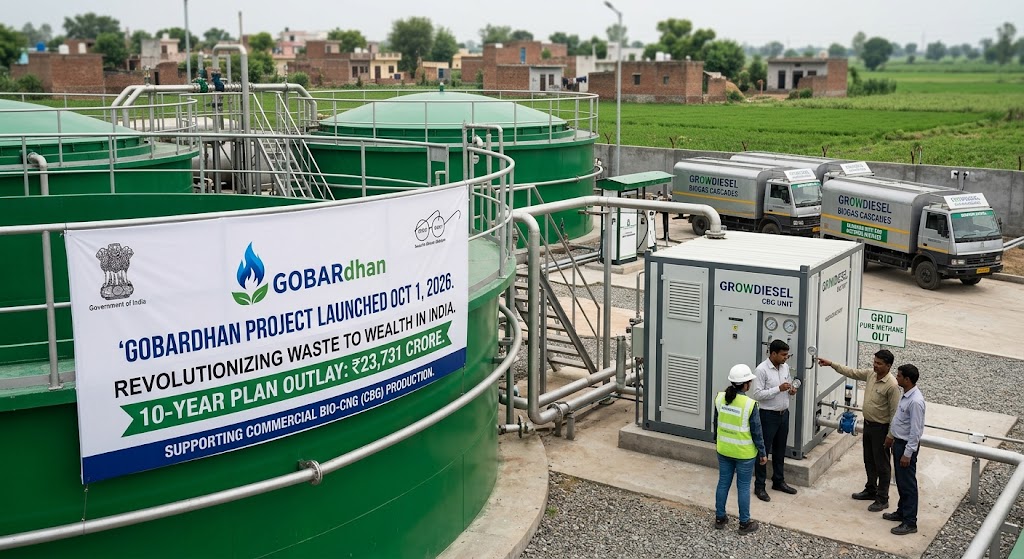
In a major policy milestone for India’s clean fuel ecosystem, Union Minister for Petroleum and Natural Gas, Shri Hardeep Singh Puri, formally launched the unified ₹23,731 Crore GOBARdhan Central Sector Scheme on October 1, 2026, alongside the release of the...
The global energy transition faces a fundamental bottleneck: centralized energy models require trillions of dollars in new grid architecture and distribution pipelines. While mega-projects stall in regulatory red tape, millions of tons of agricultural residue,...
Introduction As the global transition toward sustainable energy accelerates, India stands at a critical juncture. Rapid urban growth and extensive agricultural activity generate millions of metric tonnes of organic and agro-waste every year. Historically, this surplus...