
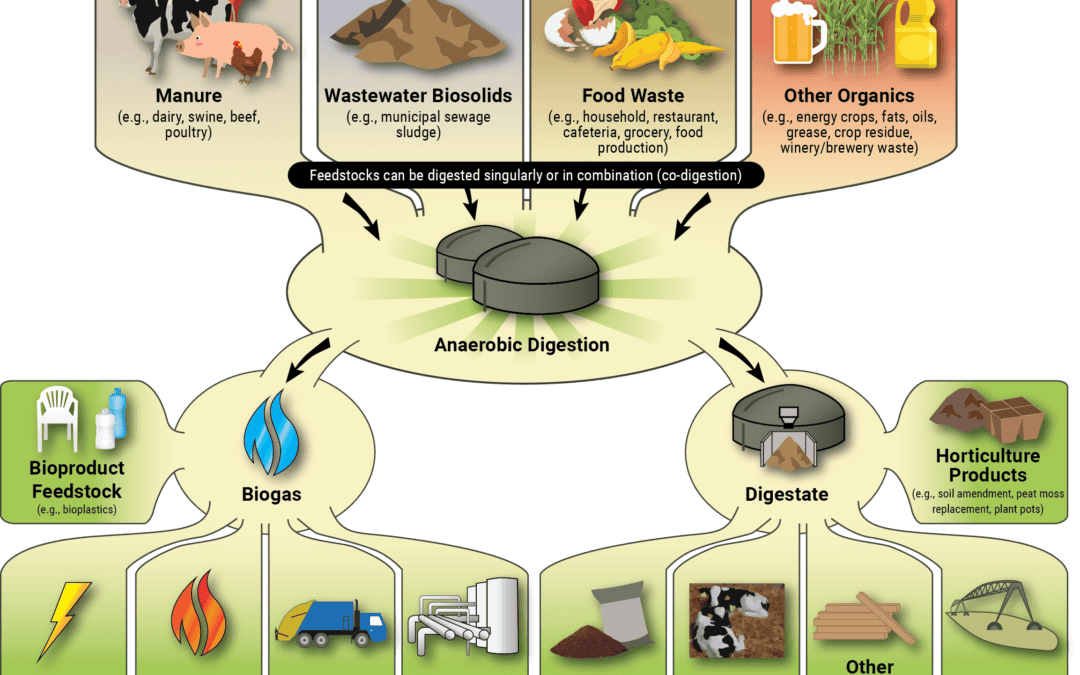
If you are operating or designing a Compressed Biogas (CBG) plant in India, your biggest operational headache has never been the technology. It has been the trash.
For years, processing Municipal Solid Waste (MSW) meant dealing with a logistical nightmare: plastic bags wrapped around machinery, toxic chemical leaching slowing down bacterial cultures, and massive capital spent just trying to sort the “wet” from the “dry.”
But the game completely flipped with the strict national enforcement of the 4-Way Waste Segregation Mandate.
By legally forcing municipalities, commercial hubs, and residential clusters to separate waste into four hyper-specific streams—Wet, Dry, Sanitary, and Special Care—the government didn’t just pass an environmental law. They handed CBG operators a massive, indirect financial subsidy.
1. Slashing Pre-Treatment Capex by Up to 30%
In a typical MSW-to-Biogas plant model, a massive chunk of your initial structural budget goes directly into heavy-duty mechanical segregation lines. You need trommels, ballistic separators, and magnetic belts just to get the organic substrate clean enough for a digester tank.
With 4-way sorting enforced at the source, the incoming organic fraction arrives pre-cleared.
-
Minimized Contamination: Virtually zero plastics, glass shards, or inert debris entering your storage bays.
-
Reduced Equipment Wear: Less abrasive materials mean your shredders, macerators, and slurry pumps last twice as long before needing replacement parts.
-
Leaner Plant Footprints: You can reallocate heavy segregation budgets directly into expanding your core biochemical digestion capacity.
2. Unlocking Supercharged Methane Yields
Anaerobic digestion is fundamentally a biological process driven by living bacterial ecosystems. When unsegregated waste introduces toxic cleaning chemicals, heavy metals, or volatile non-organics into a digester, it causes immediate biological shock. The pH drops, the bacteria go dormant, and your daily gas output plummets.
Clean, source-segregated wet waste acts like high-grade fuel for your digesters.
| Feedstock Metric | Mixed Unsegregated MSW | Source-Segregated Wet Waste |
| Volatile Solids (VS) Purity | Low (highly diluted by inerts) | Extremely High |
| Digester Retention Time | Long, unpredictable cycles | Short, optimized digestion windows |
| Average Methane ($CH_4$) Yield | ~40–500 $m^3$ per ton | Up to 80–110 $m^3$ per ton |
Turning Clean Inputs into Bankable Data
While clean feedstock drastically improves the physical life of your plant, the true commercial victory lies in predictability. When your feedstock input is uniform and clean, your financial models transition from “educated guesses” to bankable bulletproof metrics.
This is exactly where digital modeling becomes your plant’s greatest asset. By leveraging precision platforms like BioFlux (BiogasFlux.com), developers can map these newly standardised, segregated regional waste streams against dynamic chemical yield models.
1.Feedstock Mapping:Using BioFlux Engine.
The Operational Truth: The plants that fail in the modern biofuel era aren’t failing due to poor gas markets—they fail due to unmanaged input risks. Source segregation eliminates your single largest variable, transforming raw municipal waste into a highly predictable, high-yield industrial asset.
The regulatory framework has officially cleared the path. The feedstocks are clean, the off-take mandates are locked in, and the digital tools to map your ROI are live. It’s time to build.